 Call Us




California Motorcycle Helmet Law: Does It Affect Your Injury Claim?
TL;DR: Not wearing a helmet doesn't automatically prevent you from filing a motorcycle injury claim in California. However, it may affect how much compensation you recover if the insurance company argues that your injuries were made worse because you weren't wearing a helmet or weren't wearing one properly. Knowing how California's helmet laws and comparative negligence rules can help you better understand how these issues may affect your claim.
Table of Contents
 What Does California's Helmet Law Require? Can You Still File a Claim if You Weren't Wearing a Helmet? How Helmet Use Can Affect Your Compensation What if Your Helmet Came Off During the Crash? Frequently Asked Questions What Does California's Helmet Law Require? Can You Still File a Claim if You Weren't Wearing a Helmet? How Helmet Use Can Affect Your Compensation What if Your Helmet Came Off During the Crash? Frequently Asked Questions |
Do Helmet Laws Affect a Motorcycle Injury Claim?
Whether you're dealing with a motorcycle accident caused by a road hazard or someone else's negligence, these crashes often result in serious injuries. One of the first questions insurance companies may ask is whether the rider was wearing a helmet. Many people assume that if a rider wasn't wearing a helmet, they automatically lose the right to pursue compensation. Fortunately, that's not how California law works.
While the California motorcycle helmet law requires riders to wear helmets, failing to do so doesn't automatically prevent you from recovering damages after an accident. Instead, the issue usually becomes whether the lack of a helmet contributed to the injuries you suffered. Understanding how motorcycle helmet laws interact with California's comparative negligence rules can help you better understand what to expect during a motorcycle injury claim.
What Does California's Helmet Law Require?
Under California Vehicle Code § 27803, all motorcycle riders and passengers must wear a safety helmet that meets California's requirements when riding on a motorcycle, motor-driven cycle, or motorized bicycle on a highway. The law also specifies that the helmet must be properly fitted and fastened with its straps. To satisfy California motorcycle helmet requirements, the helmet must generally:
Meet federal DOT safety standards. Be a properly fitted motorcycle helmet. Be securely fastened while riding. Be designed for motorcycle use.
Simply wearing any helmet isn't always enough. A novelty helmet, or one that doesn't meet motorcycle helmet safety requirements, may not provide the same level of protection as a DOT-approved helmet.
Likewise, a properly fitted and fastened motorcycle helmet is important because an unsecured helmet may not stay in place during a collision.
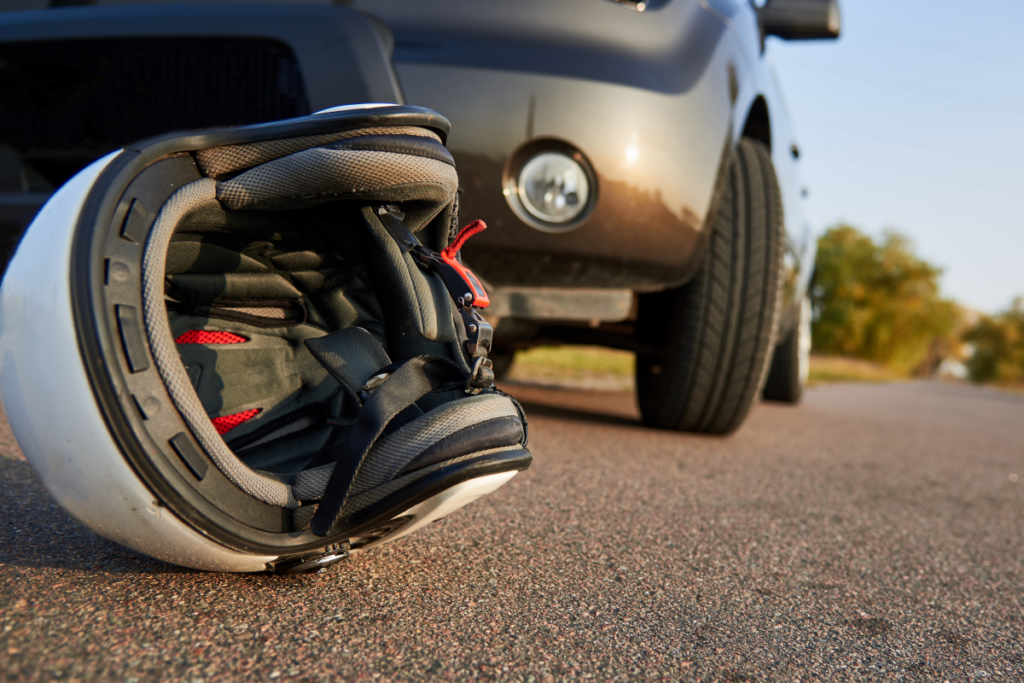
Can You Still File a Claim if You Weren't Wearing a Helmet?
Yes. One of the biggest misconceptions is that not wearing a helmet automatically prevents someone from filing a personal injury claim. In reality, California follows a pure comparative negligence system. That means you may still recover compensation even if you were partially responsible for your injuries.
For example, imagine another driver runs a red light and crashes into your motorcycle. Even if you weren't wearing a helmet, the other driver may still be responsible for causing the collision. However, the insurance company may argue that your head injuries could have been reduced or avoided if you had been wearing a helmet.
Whether that argument succeeds depends on the specific facts of the case and the medical evidence. In other words, a motorcycle accident without a helmet doesn't automatically eliminate your claim—it may simply become one factor when determining damages.
How Helmet Use Can Affect Your Compensation
So, do helmet laws affect a motorcycle injury claim? They can. Whether helmet use in a motorcycle accident claim affects compensation often depends on the injuries involved. For instance, imagine a scenario where a rider suffers a traumatic brain injury after not wearing a helmet in a motorcycle accident.
The insurance company argues that some or all of the head injury could have been prevented by wearing a DOT-compliant helmet. Because California follows comparative negligence principles, a jury could determine that the rider shares some responsibility for the severity of those specific injuries.
Let’s look at another example. Suppose a rider isn't wearing a helmet but suffers only a broken leg after another driver causes the crash. Since a helmet would not have prevented a broken leg, the rider's failure to wear one may have little or no effect on compensation for that injury.
This illustrates an important point: the issue isn't simply whether you were wearing a helmet. It's whether the lack of a helmet actually contributed to the injuries for which you're seeking compensation.
What if Your Helmet Came Off During the Crash?
People are often surprised to learn that a helmet coming off during an accident doesn't necessarily mean they violated California's helmet law. Several questions may need to be answered, including:
Was the helmet DOT compliant? Was it properly fitted? Was the chin strap securely fastened? Did the impact itself cause the helmet to come off? Was there a defect in the helmet or its retention system?
Similarly, if the helmet wasn't properly secured before the accident, the insurer may argue that the rider failed to comply with California's helmet requirements. Whether that ultimately affects compensation depends on the facts of the case and the available evidence.
If you need legal advice, our motorcycle accident lawyer in North Hollywood can evaluate your case and help you pursue fair and just compensation for your injuries. Since 1998, Yepremyan Law Firm has represented thousands of injured victims throughout Southern California. We offer free consultations on a contingency fee basis, meaning you pay nothing unless we recover compensation for you.
To book your appointment, contact our personal injury law firm in North Hollywood today. With 24/7 support, our bilingual team is ready to answer your questions. Our personal injury lawyer in North Hollywood is a phone call away to help you understand your rights and legal options.

Frequently Asked Questions
Can I File a Motorcycle Injury Claim if I Was Not Wearing a Helmet?
Yes. Not wearing a helmet does not automatically prevent you from filing a motorcycle injury claim in California. However, if the insurance company can show that failing to wear a helmet contributed to your injuries, it may affect the amount of compensation you recover.
How Much Can Not Wearing a Helmet Reduce My Settlement?
There isn't a fixed percentage. The impact depends on the specific injuries, the medical evidence, and whether the lack of a helmet contributed to those injuries. Every case is evaluated based on its own facts.
Can My Claim Be Affected if the Helmet Was Not Properly Fastened?
Potentially. California law generally requires riders to wear a properly fitted and fastened motorcycle helmet. If the helmet wasn't securely fastened and that contributed to your injuries, the insurance company may argue it should be considered when evaluating your claim.
What if My Helmet Came Off During the Motorcycle Accident?
A helmet coming off during a collision doesn't automatically mean you violated the law. Investigators may look at whether the helmet fit properly, whether it was securely fastened, and whether the force of the crash or a possible helmet defect caused it to come off. Those facts may influence how the claim is evaluated.
*No Legal Advice Intended. This website includes general information about legal issues and developments in the law. These materials have been prepared for general informational purposes only and are not intended to be legal advice. Please consult an attorney for legal advice pertaining to any particular legal matter. Use of and access to this website or any of the links or resources contained within the site do not create an attorney-client relationship between the reader, user, or browser and Yepremyan Law Firm and any of its attorneys, employees, or associates.
